Thursday, May 26, 2011
Shopping in: Chattanooga & Atlanta
Last week I visited Chattanooga and thoroughly enjoyed the city's quiet charm. Residents are justifiably proud of this city: a cultured and genteel berg just two hours driving from Nashville and Atlanta. If it's been several years since you visited, there's more to see than just the Choo Choo. There's a burgeoning arts community, beautiful riverfront parks, easy access to the outdoors and of course… terrific restaurants and shopping. I also ventured down to Atlanta for a quick spin through town to check out some shops.
Here's a quick overview of what I saw and loved:
Revival Uncommon Goods: Chattanooga's source for classic home furnishings with a modern twist. Owners Rodney Simmons and Billy Woodall have brought some fabulous brands from New York and Europe (Astier de Villatte, John Derian, Juliska and Simon Pearce) to appoint their gorgeous new store anchoring Warehouse Row. Also look for industrial antiques and hand-wrought light fixtures. The sale bin next to the cash wrap was a wonderland… I'm still regretting not picking up two charcoal alpaca throws with the red whipstitch ($62.50 marked down from $265.00) that were gone the next day. Lesson learned.
Nell's: Hollywood glamour has a home in Tennessee (and it's not in Nashville!) In 2006, Jimmy Adams moved his whole store from Beverly Boulevard to Chattanooga to raise his daughter, as well as the bar for interior design in Chattanooga. Everything in the store has a 1930s feeling, as though Katherine Hepburn might walk in with a drink and settle into one of the sumptuous Hickory club chairs. Adams has also brought in one-of-a-kind pieces from his travels. While it's not cheap, Nell's is another great place to look for sales: we saw a number of items marked 50% off.
Clement's Antiques & Auctions: Imagine that the contents of Versailles, Hearst Castle and Liberace's home were all emptied and put up for sale in a non descript roadside warehouse and you have an idea of what Clement's is all about. Serious Louis XVI and George III antiques mingle with kitschy Greek & Roman statuary and over-the-top pieces smothered with ormolu. If you have a large space and a love of ENORMOUS carved gold-leaf mirrors… this is your Xanadu. They also hold auctions 3-5 times a year.
Sid Mashburn: The founder and namesake cut his chops designing for Ralph Lauren & J-Crew before returning home to found his own label based on Atlanta's West Side. Mashburn brings back the classic haberdashery with a southern preppy flair. Many items are made in store (tailors are at work and on view) and he also carries classics "that can't be improved upon" like Levi's 501 jeans and Rod Lavers. Best of all was the service… they were friendly, intelligent, approachable and never overbearing.
Antiques & Beyond: If you're long on style and short on budget, A&B is your place. Every dealer in this antiques collective seems to have stepped up their game and wants to sell their wares. We saw a pair of Sherrill wingbacks upholstered in coral velvet for $950, generously proportioned mirrors for under $300 and too many great lamps to count for under $150. This being a collective, the list price is only the first offer in negotiation, so don't be shy about bargaining.
Tuesday, May 24, 2011
Amazon Saves Me From Myself
Let me state my bias upfront… I am a rabid fan of Amazon.com. It began with my love for reading and being able to find any book affordably… then developed into an obsession with the Kindle – which allows me to pack a whole library into a slim volume on travels throughout the U.S., Asia and Europe. I became a loyal Prime customer a few years ago when I started ordering more and more gifts for friends' weddings and random things for me (like luggage or linens) – paying upfront for a year's worth of shipping throughout the lower 48 on Prime eligible products. My obsession turned into evangelism this year with the introduction of Amazon's "Subscribe and Save."
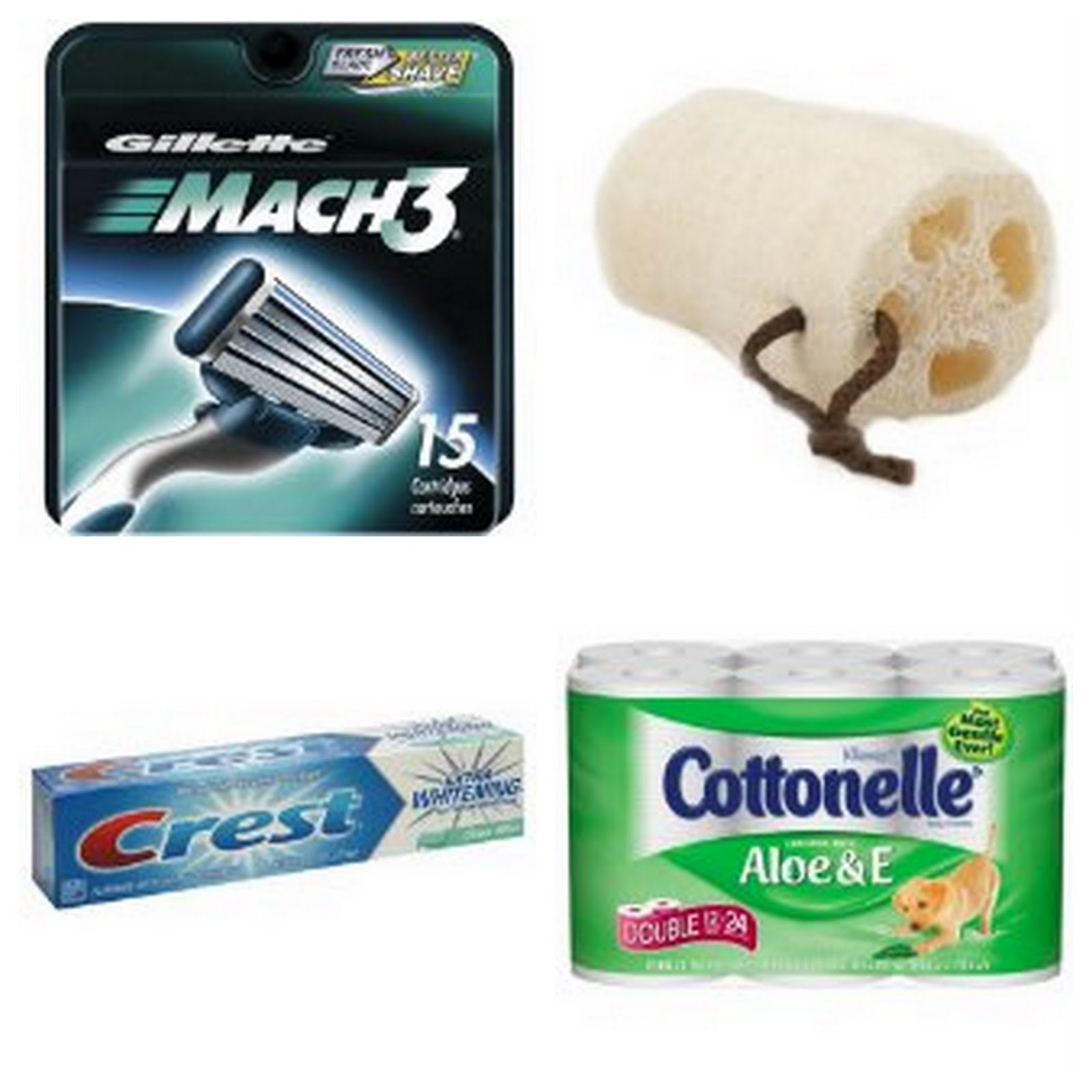
Subscriptions aren't just for magazines anymore. On Amazon, I subscribe to things I regularly deplete and find myself regularly running off to CVS buy in a panic… like my favorite brand of razors, deodorant, toothpaste, battery toothbrush refills… and even my shower loofahs. I also plan to add toilet paper, laundry detergent and anything too cumbersome to schlep home from the store (I don't have a car.) Instead, all of these items show up on my doorstep while I'm at work or off enjoying myself. In return for the automatic interval order every one, three or six months, Amazon gives me free shipping and a 15% discount off the list price. Not only does the service eliminate excess trips to the store, I also don't find myself heading out for a week-long trip without deodorant or extra razors.
Genius, huh?
Sunday, February 13, 2011
Hipster Brides Rejoice
Five years ago, distinctions in bridal market were pretty clear: high end and low end. High end meant you were shopping at Saks or Neimans for Vera Wang and the like… low-end meant an affordable acetate taffeta dress from David's Bridal. Shopping in an intermediate category meant wearing brands you've never heard of – or haven't worn since prom. Bridal styles at both ends generally fell into three categories princess (poofy,) contemporary (form-fitting,) or casual (shorter hem.)
Thankfully, the options are now much more varied; several retail brands have added new energy to the bridal category. J-Crew's entrance into the wedding game brought a fresh dose preppy style at more affordable price points… now URBN (parent company of hipster brands Urban Outfitters & Anthropologie) is launching Bhldn (evidently, the only ownable url for "Beholden". From the looks of the preview site, Bhldn is aiming for the same handmade feel and urban style as Anthropologie.
Appropriately, the brand launches on Valentine's Day and plans to open two stores later in the year.
Thursday, February 10, 2011
The Personal Catalogue
A new crop of social media platforms aimed at the arts and design cognoscenti have captured an expanding audience over the last few months. Polyvore, Svpply, FFFFound, TheFancy, Wanelo and Pinterest are all aimed at professional and amateur tastemakers who share products they love and organize inspiring images from all over the web. While the sites are all different from one another, it's clear that designers, buyers, editors and photographers are actively cataloguing images on all the sites. Each site has a different angle… some are more oriented toward fashion, graphic design, craft, etc. So far, my favorite of the bunch is Pinterest, for its large community and flexible interface.
Over the course of 72 hours in December, a curiosity for Pinterest snowballed into full-blown addiction. The site allows me to pull almost any image from the web using a bookmarklet and post them onto boards under any category of my choosing. For years, I've been clipping inspiring images from magazines and catalogues, so this is making my life a little easier and a lot neater. I have an enduring record of products I dream of owning or intend to purchase. It's also great fun to browse boards of my friends and design professionals – a big part of that fun is discovering images other users want to post to their own boards.
So how is this all useful? Well it remains to be seen… a lot of information is contained in an image (1,000 words) and it's still a little early to determine how retailers and brands can fully leverage these communities. There's the grandiose a dream that everyone with an internet connection will create their very own personal store filled with all their favorite things. More practically, retailers and brands might be able to identify emerging trends or better estimate preseason demand by measuring enthusiasm among forward-thinking creatives.
At the very least, I've found the sites to be a valuable tool for saving and sorting compelling images.
Friday, February 4, 2011
What on earth is going on over at J Crew?
There is much to be admired at J Crew… however behind the preppy-boho façade and Jenna Lyons PR machine, corporate drama has been brewing.
It all started last November when the company announced it would be purchased for $3Bn in a leveraged buyout by TPG Capital and Leonard Green & Partners. J Crew has a long history with TPG, who took the company private in 1997 and gave management free reign to close underperforming stores, retool its product lineup and hire the brilliant Mickey Drexler (after he was fired by Gap.) In 2006, J Crew went public again and Drexler and TPG made a fortune. Now, it looks like they're aiming for an encore performance.
It seems that in this latest deal, Drexler and Leonard Green privately hatched the plan to sell the company without notifying the board for weeks… then the board signed on without a proper auction process. As CEO, Drexler has enormous incentives to take the company private and the potential for a conflict that compromises shareholders' interests is quite high. Activist investors thought J Crew could command a better price, smelled a lemon and sued… then J Crew started shopping the deal to other investors… then they settled… and now the settlement has fallen apart. The story has more twists than a telenovela.
So will the deal pull through? Probably. However, the clumsy deal process has been such a train wreck it's become a case study in bad board governance and has damaged Drexler's sterling reputation as the merchant prince.
Tuesday, December 21, 2010
Design for Flying
This time of year I must come clean as a frequent-flier Miles Junkie. This week, I've been double checking my account to ensure I hit Platinum before year's end. Why the obsession with miles status? Mostly, because it's the only way I've found to ease the pain of travel. Status guarantees shorter lines at check-in and security, waived baggage fees, space overhead for bags, fancy lounge access, and every so often… a seat a the front of the plane.
A major reason flying is so unpleasant is that the vast majority of airport terminals are designed for travel in a different (pre-9/11) era – when in-flight meals were served au gratis, security was a quick scan for metal objects and even the most careful travelers arrived at the airport only 30 minutes before departure. Airlines receive too much blame for the hassles of flying... the flying public are in a lousy mood before they ever step on a plane.
It's no wonder we're miserable: beefed up security can't fit into cramped quarters at outdated airports, there's not enough food (or horrible choices) in the terminal before forced in-flight fasting and seating in the gate areas is sparse. If your flight's delayed, may the flying gods be at your side as you find space to charge your laptop or phone. That Wifi you need to change your flight/hotel/car service will cost you… if it's even available. Feeling parched? That's because you tossed your water bottle hours ago at security.
Several architecture firms, notably HOK & Gensler, are trying to make flying fun (for everyone) again. Allison Arief wrote in the NYT about a new crop of terminal projects for which planning and design began after 9/11. If you're lucky enough to fly from the North Terminal in Detroit, the JetBlue Terminal at Kennedy or Raleigh Durham's Terminal 2, you'll find more space, more light, and more pleasant places to spend a few hours. I'm hoping that SFO's long-delayed Terminal 2, set to open in spring 2011, will take some pain out of my travel on American Airlines.
Sunday, November 28, 2010
Vet Your Vendors!
It's not hard to understand the basic premise of service driving business results - it's good for business (more revenue) when customers are treated well and bad for business (less revenue) when they are treated poorly. This is my gospel.
So I was absolutely dumbfounded when I read the cover story in this morning's New York Times business section about a seller of faux-designer eyewear who builds sales volume the more he upsets his customers. It recounts the chilling tale of Clarabelle Rodriguez, who purchased counterfeit frames and contact lenses from an online retailer she found through a Google search. The retailer, Vitaly Borker of DecorMyEyes, calls customers "Psychos" who seek refunds (whether they don't like the product or it's not what they're looking for.) He meddled with disputes through credit providers, threatened her with a fake lawsuit and bodily harm, then harassed her by emailing photos of their front doors and a message of "I know where you live" (he claims he merely sent a screenshot of Google's street-view.)
It turns out the bully tactics are his marketing strategy. The worse he behaves, the more these customers vent about his monstrous behavior in consumer-watch chat rooms… and in a truly unfortunate turn, these complaints raise the search-relevance rankings for the front door of his business. Before this story came out, if you searched his business by name, you'd find the complaints. But when you plugged an eyewear brand or "designer frames" into the search box, his business was among the top three results – sometimes ahead of a brand website. The unhappy customers never return, but they unwittingly drive new business his way by complaining online – SEO gone horribly awry.
The story points out a difficult-to-solve flaw in Google's search algorithm and failings in vendor-quality control of EBay, consumer watchdog groups, credit card companies and issuing banks… not to mention the inability of the New York State Attorney General and criminal investigators to pursue thuggish retailers (it should be noted that Amazon.com's affiliate program came off smelling like a rose in this story.) Mr. Borker found clear incentives for bad behavior and his story lends chilling truth to the old adage that "even bad publicity is good publicity."
This should all underscore the importance of the "Buyer Beware" manta and the need to investigate your vendors before making a purchase.
Photo courtesy of the New York Times
So I was absolutely dumbfounded when I read the cover story in this morning's New York Times business section about a seller of faux-designer eyewear who builds sales volume the more he upsets his customers. It recounts the chilling tale of Clarabelle Rodriguez, who purchased counterfeit frames and contact lenses from an online retailer she found through a Google search. The retailer, Vitaly Borker of DecorMyEyes, calls customers "Psychos" who seek refunds (whether they don't like the product or it's not what they're looking for.) He meddled with disputes through credit providers, threatened her with a fake lawsuit and bodily harm, then harassed her by emailing photos of their front doors and a message of "I know where you live" (he claims he merely sent a screenshot of Google's street-view.)
It turns out the bully tactics are his marketing strategy. The worse he behaves, the more these customers vent about his monstrous behavior in consumer-watch chat rooms… and in a truly unfortunate turn, these complaints raise the search-relevance rankings for the front door of his business. Before this story came out, if you searched his business by name, you'd find the complaints. But when you plugged an eyewear brand or "designer frames" into the search box, his business was among the top three results – sometimes ahead of a brand website. The unhappy customers never return, but they unwittingly drive new business his way by complaining online – SEO gone horribly awry.
"When I fly to Las Vegas I look down and see all these houses," he starts. "If someone in one of those houses buys from DecorMyEyes and ends up hating the company, it doesn't matter. All those other houses are filled with people, too, and they will come knocking."
The story points out a difficult-to-solve flaw in Google's search algorithm and failings in vendor-quality control of EBay, consumer watchdog groups, credit card companies and issuing banks… not to mention the inability of the New York State Attorney General and criminal investigators to pursue thuggish retailers (it should be noted that Amazon.com's affiliate program came off smelling like a rose in this story.) Mr. Borker found clear incentives for bad behavior and his story lends chilling truth to the old adage that "even bad publicity is good publicity."
This should all underscore the importance of the "Buyer Beware" manta and the need to investigate your vendors before making a purchase.
Photo courtesy of the New York Times
Friday, November 26, 2010
Small Business Saturday
Fighting my way through Black Friday crowds at big box stores for "door-buster" promotions holds little appeal; yet I certainly don't go out of my way to abstain from shopping over Thanksgiving weekend. American Express is promoting the first-ever Small Business Saturday aimed at supporting one of their core market segments: small retailers. If you have time tomorrow, take an hour to stroll down downtown and patronize a local business. If the weather outside is frightful, here are some of my favorite places to find small businesses online:
Etsy: The ultimate affordable art gallery… thousands of artists and craftsmen sell their wares. The selection can be overwhelming, but it's great fun to explore.
Taigan: An online mall filled with some of the finest boutiques from around the country. Each store has a beautifully edited selection of stylish wares.
Desquval: Always ahead of the fashion curve? Here you find quality and value while supporting the ateliers of emerging designers.
Etsy: The ultimate affordable art gallery… thousands of artists and craftsmen sell their wares. The selection can be overwhelming, but it's great fun to explore.
Taigan: An online mall filled with some of the finest boutiques from around the country. Each store has a beautifully edited selection of stylish wares.
Desquval: Always ahead of the fashion curve? Here you find quality and value while supporting the ateliers of emerging designers.
Tuesday, November 23, 2010
Age of Discovery
A few months ago, I discussed the surgical approach internet shoppers take toward making purchases. In contrast, shoppers in the stores channels have the opportunity to linger and discover delightful products they never intended on buying. This is the provenance of product merchandisers who design store windows, build displays and arrange shelves strategically to create a sense of discovery for customers. Until recently, e-commerce sites have used automated suggestions by aggregating data (Amazon's "customers who bought item X also bought Y") or using the brilliant insight that if you're buying sheets, you might also want pillows. The suggestions are usually so predictable that they don't allow space for true discovery of product, which can lead to unplanned (and more profitable) sales.
A new crop of sites is using a potent combination of evolving search technologies and "curated" (merchandised) content to divert the attention of the precision consumer less predictable ways. Nordstrom.com includes a regularly updated sort of e-zine that encourages customers to explore and be inspired by a number different brands and styles. The current issue highlights a stylish couple's unconventional wedding, a city profile of Chicago and a Vogue-worthy event-attire layout. "The Conversation" offers interesting articles and is beautifully photographed – more importantly, it gives customers the chance to spot items (like a pretty Leifsdotter skirt) they wouldn't otherwise through a standard category/brand search.
Perhaps the most exciting new merchant enlivening online shopping is Google's Boutiques.com. The company uses Like.com's (acquired by Google) advanced search technology, which recognizes style genres, shapes, patterns, hemlines, etc. Boutiques.com invited a number of celebrities, stylists, designers and influential bloggers to pull women's merchandise from sellers to create a signature look that is posted in a personalized boutique; customers shopping from the boutique are directed to sellers to complete the purchase. Google tapped into a cultural obsession (and well established product marketing strategy) by hiring celebrities as their merchandisers... each one has a fan base that aligns with a target and position. Site users can also create a personalized boutique by establishing preferences for style genre and product attributes.
Besides being smart and original, both sites are slickly produced and genuinely fun. Best of all, surgical shoppers are encouraged to take time to explore and discover new merchandise.
A new crop of sites is using a potent combination of evolving search technologies and "curated" (merchandised) content to divert the attention of the precision consumer less predictable ways. Nordstrom.com includes a regularly updated sort of e-zine that encourages customers to explore and be inspired by a number different brands and styles. The current issue highlights a stylish couple's unconventional wedding, a city profile of Chicago and a Vogue-worthy event-attire layout. "The Conversation" offers interesting articles and is beautifully photographed – more importantly, it gives customers the chance to spot items (like a pretty Leifsdotter skirt) they wouldn't otherwise through a standard category/brand search.
Perhaps the most exciting new merchant enlivening online shopping is Google's Boutiques.com. The company uses Like.com's (acquired by Google) advanced search technology, which recognizes style genres, shapes, patterns, hemlines, etc. Boutiques.com invited a number of celebrities, stylists, designers and influential bloggers to pull women's merchandise from sellers to create a signature look that is posted in a personalized boutique; customers shopping from the boutique are directed to sellers to complete the purchase. Google tapped into a cultural obsession (and well established product marketing strategy) by hiring celebrities as their merchandisers... each one has a fan base that aligns with a target and position. Site users can also create a personalized boutique by establishing preferences for style genre and product attributes.
Besides being smart and original, both sites are slickly produced and genuinely fun. Best of all, surgical shoppers are encouraged to take time to explore and discover new merchandise.
Monday, November 22, 2010
The Frenzy
Even though it seems like Labor Day was just last week, the holiday shopping onslaught is upon us. In the wee hours of Friday morning, legions of American shoppers will pour into retailers for "door-buster" promotions.
Even though profit margins on must-have items are slim (at best,) Black Friday is an important barometer of the overall enthusiasm for the holiday shopping. Historically, Thanksgiving weekend accounts for almost 12% of total holiday sales and BF accounts about half that figure. For individual retailers, the stakes are incredibly high: it can be impossible to recover from a weak start to holiday sales. Two years ago, margins quickly evaporated in an attempt to induce spending and move inventory off of shelves… it was a catastrophe. There's cautious consensus out there betting that pent up demand and upticks in both consumer spending this month and optimism about the economic outlook among affluent households will yield a successful holiday.
Much has been made of in recent years of Cyber Monday (horrible name), which is the day Americans return to work and go shopping online. Offers of free shipping and deals consumers may have missed on Friday are made available online. These promotions are being extended as early as the Wednesday before Thanksgiving. This is good news not only for employers who get precious little output on Monday, but also takes significant pressure off retailers' stores channel. Early online promotions are one way to head off stampede concerns at your local Walmart.
So here's a holiday wish for all of you who are braving the stores this year… I hope you find civility and good service in addition to the items you're looking for. When you don't, I wish you the patience and fortitude to blithely smile and keep your sense of humor intact.
Even though profit margins on must-have items are slim (at best,) Black Friday is an important barometer of the overall enthusiasm for the holiday shopping. Historically, Thanksgiving weekend accounts for almost 12% of total holiday sales and BF accounts about half that figure. For individual retailers, the stakes are incredibly high: it can be impossible to recover from a weak start to holiday sales. Two years ago, margins quickly evaporated in an attempt to induce spending and move inventory off of shelves… it was a catastrophe. There's cautious consensus out there betting that pent up demand and upticks in both consumer spending this month and optimism about the economic outlook among affluent households will yield a successful holiday.
Much has been made of in recent years of Cyber Monday (horrible name), which is the day Americans return to work and go shopping online. Offers of free shipping and deals consumers may have missed on Friday are made available online. These promotions are being extended as early as the Wednesday before Thanksgiving. This is good news not only for employers who get precious little output on Monday, but also takes significant pressure off retailers' stores channel. Early online promotions are one way to head off stampede concerns at your local Walmart.
So here's a holiday wish for all of you who are braving the stores this year… I hope you find civility and good service in addition to the items you're looking for. When you don't, I wish you the patience and fortitude to blithely smile and keep your sense of humor intact.
Monday, November 15, 2010
Mad for Plaid
Memories of my first semester of b-school came flooding back as I watched Inside Job. The films highlights the enormous negative impact sleazy traders, incomprehensible financial instruments, lazy regulators and misguided mathematical geniuses have had on the world. As I entered school in Fall 2008, no one wanted to work for a hedge fund anymore.
Demand for sterling cuff links and Paul Stuart suits melted along with the global economy. However, an enduring style trend quickly emerged. From Paris to Hong Kong, fine boutiques are stocking heritage brands like Gitman, Woolrich and Red Wing. People are choosing earthy plaids and chambrays over fine English Oxfords. Denim is worn with cuffs rolled up and khakis are comfortably wrinkled instead of neatly pressed. Especially this fall, major American cities look as though they're mostly populated by early 20th century farm-workers and machinists. Much to my chagrin, facial hair (untamed beards and bushy moustaches) has made a big comeback among the hipster crowd.
It's no wonder consumers are dressing the part of laborers, they are looking to the heritage brands of their childhood in order to associate themselves with people who actually produce things. While it has a decidedly masculine tone, the trend is not limited to menswear. Perhaps the most baffling incarnation of this trend was Ralph Lauren's Spring 2010 Collection, which put a luxe spin on the Grapes of Wrath (one signature piece was a silver lamé overall gown.) The connection to labor doesn't stop with clothes. Moss, the Soho über-chic shelter gallery, just wrapped up an exhibition of aggressively industrial-yet-handmade pieces. Unsurprisingly, the New York Times noted recently that mainstream media has adopted a more masculine version of the ideal male.
I'm sure we'll find a reason to dress to-the-nines again soon, but in the meantime I'm enjoying dressing the part of a lumberjack (sans facial hair) several days a week.
Demand for sterling cuff links and Paul Stuart suits melted along with the global economy. However, an enduring style trend quickly emerged. From Paris to Hong Kong, fine boutiques are stocking heritage brands like Gitman, Woolrich and Red Wing. People are choosing earthy plaids and chambrays over fine English Oxfords. Denim is worn with cuffs rolled up and khakis are comfortably wrinkled instead of neatly pressed. Especially this fall, major American cities look as though they're mostly populated by early 20th century farm-workers and machinists. Much to my chagrin, facial hair (untamed beards and bushy moustaches) has made a big comeback among the hipster crowd.
It's no wonder consumers are dressing the part of laborers, they are looking to the heritage brands of their childhood in order to associate themselves with people who actually produce things. While it has a decidedly masculine tone, the trend is not limited to menswear. Perhaps the most baffling incarnation of this trend was Ralph Lauren's Spring 2010 Collection, which put a luxe spin on the Grapes of Wrath (one signature piece was a silver lamé overall gown.) The connection to labor doesn't stop with clothes. Moss, the Soho über-chic shelter gallery, just wrapped up an exhibition of aggressively industrial-yet-handmade pieces. Unsurprisingly, the New York Times noted recently that mainstream media has adopted a more masculine version of the ideal male.
I'm sure we'll find a reason to dress to-the-nines again soon, but in the meantime I'm enjoying dressing the part of a lumberjack (sans facial hair) several days a week.
Sunday, November 14, 2010
Cookies and Consumer Behavior
Today I'm baking my grandmother's famous (to me) cookie recipe. Grammy made sure not one birthday (neither mine, my siblings nor cousins) passed without us receiving a crisp $5 bill and a tin full of oatmeal cookies. She was not short on grandkids, so this was not an insignificant sacrifice of time nor money. The taste of these particular cookies evokes my happy childhood and my tough-yet-tender grandmother, baking many dozens of cookies in her tiny trailer kitchen.
For those of you who want to do some baking, here's the recipe (so easy, an MBA can do it.) Now, not so secret.
Oatmeal Crispies (makes 5 dozen)
1 cube Nucoa (margarine) and ½ cup Crisco (or 1 cup [2 sticks] unsalted butter at room temperature)
1 ¼ cups dark brown sugar
1 cup white sugar
2 eggs
1 tsp vanilla
1 ½ cups flour mixed with 1 tsp baking soda
3 cups quick cooking oats (whole oats are fine)
A generous helping of love (Grammy's words, not mine.)
Directions:
Preheat oven to 350. Cream brown sugar with Nucoa and Crisco (butter), add white sugar and stir until creamy again. Add vanilla and eggs, mix well. Add flour and soda and mix thoroughly. Add oats and Love and stir until there are no dry oats. [at this point, I drop them in teaspoon size balls onto a baking sheet and bake at 350 for 9-12 minutes, until the edge of the cookies are brown, but not burned.] Form in rolls, wrap in waxed paper and chill. Cut into ¼" slices and bake on ungreased cookie sheet 10 to 12 minutes at 350. Makes approximately 5 dozen. Enjoy.
Wednesday, September 22, 2010
East Meets East
Hermès just opened the first outpost of Shang-Xia, a new luxury lifestyle brand based in PRC for PRC consumers. The brand reflects Hermès' legacy of artfulness and fine craftsmanship. Products like cashmere sweaters and fine porcelain showcase Chinese craft traditions with a contemporary minimalist twist. The small store opened in Shanghai at the Hong Kong Plaza Mall, additional stores are planned for Paris and Beijing in due course.
The establishment of Shang-Xia is evidence Hermès has found its footing in China and has the confidence to experiment. It may also confirm that the PRC consumer is growing more sophisticated. David Tang's Shanghai Tang has an early lead as the original homegrown luxury brand. PRC Consumers are experimenting beyond European and American brands – and are prepared to embrace a distinctly Chinese take on luxury lifestyle.
Shang Xia is the second Asian brand to be launched by a western company. Last month Levi Strauss & Co established Denizen, a denim brand aimed at the PRC mass market.
Photos: WWD.com
Monday, September 20, 2010
Less is More
Last week in New York, I stopped by to check out the newly restored Rhinelander, which just reopened as the Ralph Lauren menswear store on Madison and 72nd. Even though it's still hidden behind scaffolding and construction scrim, the store opened for business at the start of Fashion Week. The newly constructed women's & home flagship is set to open across the street in a few weeks.
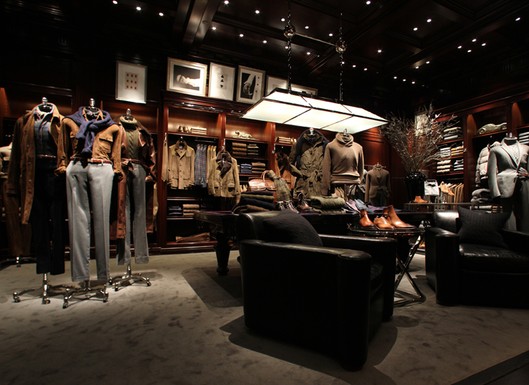
The space recalls a posh men's club... all polished mahogany, deep leather seating and richly colored hues. It goes without saying that the store is beautifully designed and the service was excellent. However, the RL merchandising team could use a lesson in restraint – in this case, less would be more. As I navigated Purple Label, I nearly knocked over a bespoke mannequin and his friend. I also had trouble finding the timepieces, which I was astounded to learn flank the front door – in plain view, but overshadowed by other gorgeousness. The sky-lit fourth floor RLX boutique was a much needed respite from the navigating dark rooms alongside Russian oligarchs.
Tuesday, August 24, 2010
Nordstrom does it again...
Nordstrom is legendary for great service…. this is the retailer who will take back almost everything and standardized "the walk around" to hand off purchases at the cash wrap. It's no surprise then that Nordstrom's new website, launched last Saturday, is brimming with thoughtful details that put the customer first. Users can now search through products with ever more detailed screening options in every category. Following the mantra that "content is king" the site is building out a section rich with articles and video that feature archetypal customers and their favorite products.
What may be most important change on the site is one you can't see… the inventory policy. While it may sound boring, it's a minor revolution in the retail world that Nordstrom has been linking their stores' inventory with the website. Most web-storefronts treat inventory as wholly separate from stores… hence, a shortage on the website might lead a customer to shop a competitor even though the desired product is on the shelf at one of the stores. It's incredibly hard to implement, but by coordinating inventory between site and store, stores reduce overages, inventory holding costs and markdowns – all the while delighting customers.
As the New York Times reported this morning, the results for Nordstrom's bottom line have been powerful…. Inventory turns are at five-year highs and the company continues to deliver strong profits in a challenging retail environment.
Saturday, August 7, 2010
Mary J. Teaches Marketers a Lesson
Back in May, I wrote about the lame launch of Hermès new fragrance, Voyages d'Hermès. Their abstract, expensive and artsy campaign for a difficult to understand product category did not yield much of an online audience. Getting customers excited about fragrance before product trial is really difficult. So how do you successfully launch a fragrance if web 2.0 marketing strategy aren't effective?
Last weekend, singer Mary J. Blige offered the beauty business a powerful marketing lesson… showing that a potent combination of celebrity, insomnia and a good story goes a long way. Blige launched her scent, "My Life," on the Home Shopping Network (HSN) at midnight on Saturday and proceeded to sell 72,000 bottles in 24 hours, a HSN record. At one point in the day, HSN's servers crashed due to sales volume. Blige's personal narrative of triumph through struggle struck a chord with home shoppers, who called in and shared their own stories before buying the fragrance. Strong narrative is a powerful tool often overlooked in launching new products.
The success of the launch seems to have caught everyone off guard – HSN, industry watchers and even Ms. Blige were overwhelmed by the response. My guess is you'll start seeing Coty running this playbook before the end of this year.
Friday, August 6, 2010
Rise of the Precision Consumer
Two weeks ago, American Express Publishing and marketing consultants at the Harrison Group released the 2010 Survey of Affluence and Wealth in America. The report details changes in the spending habits of wealthy consumers since the beginning of the Great Recession. This latest survey is an excellent indicator of long-term effects of the contraction, since consumers have emerged from their foxholes and are spending again.
One important trend documented is the emergence of wealthy "Precision Consumers." Whereas four-five years ago, these folks loosened their wallets in every category – from apparel to electronics to autos, spending liberally on everything. The Precision Consumer is still interested in luxury products but is better researched and more careful to purchase. They spend liberally in select categories where they feel luxury delivers value and fulfills explicit needs and wants.
This week, a MasterCard Advisors Spending Pulse report showed further evidence of the rise of the Precision Consumer. Spending in the electronics category is growing while apparel spending growth is stagnant. Of course, if you saw the lines outside of Apple stores last month, you didn't need to read a bunch of spending surveys to come to the same conclusion.
Friday, July 16, 2010
Are the Rich Like Us?
As retailers fight to get customers back into stores, prognosticators have hoped the high-end of the market would be the first resume spending. Even though luxury's core wealthy customers have not been as hard hit as aspirationals, there is more evidence that the return to old spending habits is a long way off. The highest end of the market continues to cut back spending in all categories. Maybe the rich really are like the rest of us.
Why is this? Well, wealth (like everything) is relative. Even though it's hard to muster sympathy, in high end real estate markets, the lower end is suffering. Foreclosures and short-sale blues are hitting these consumers just as in middle class markets – one in seven mortgages over $1 Million is seriously delinquent. Last week, the New York Times wrote about the spike in payment delinquencies and short-sales in Los Altos, CA, where the median home price is $1.5 million. Note to Los Altos: Palo Alto is snickering at you.
Luxury retailers are adapting to more careful customer behavior. More customers are making multiple visits to stores before deciding on a purchase. These consumers are not only planning purchases more prudently but waiting for possible discounts and prolonging the thrill of the purchase. Neiman Marcus is one retailer retraining associates to work with customers within the longer sales cycle.
I spoke with one customer who related her story of shopping at Ralph Lauren in Atlanta. She fell in love with an evening gown at the store, but wasn't ready to bite at the $6,000 price point. As soon as the dress was marked down to $2,000, the sales associate called her personally and she was ready to buy. Just like us? Relatively.
Monday, July 12, 2010
Retailers inspire customers to spend more and return less
Summer is in high gear and innovative retailers are exploring ways to make customers feel better about spending, maintain loyalty to their brands and reduce merchandise returns. Here's a rundown of some newer initiatives…
- Several retailers are experimenting with stricter return policies. J Crew's summer sale is now the "Final Sale"… all sales are final. Prior to the recession, upscale retailers almost always accepted exchanges and returns – even on clearance merchandise. However, as inventories are more closely monitored by Wall Street, the final sale is becoming a more common move.
- Store loyalty programs are offering more attractive benefits to bring in new customers. Just as Back to School is rolling out, Target is offering Redcard holders a 5% discount on everyday purchases – this is on top of the 10% one-day signup discount. Expect to see several more store charge cards offer similar programs during Holiday.
- Sam's Club, Walmart's warehouse store for small business, is running a novel experiment to stimulate spending. The store is offering club members affordable loans in conjunction with the Small Business Association to stimulate enterprise growth. While the company will be lucky to break even on the loans themselves, it is betting that when club members' businesses grow, so will Sam's Club.
Labels:
Inventory management,
J Crew,
Loyalty Programs,
Sam's Club,
Target,
Wal-Mart
Monday, June 7, 2010
Luxury Marketing 101
For a luxury brand to develop its customer base, it must build awareness. But sometimes, high consumer awareness undermines goals - a brand can upset or drive away core or likely customers.
I find this 2X2 helpful for understanding why a brand appeals to certain consumers, which is a good place to start devising marketing and partnership strategy. I divided awareness on two axes: the vertical axis represents mass-consumer awareness and the horizontal is awareness among likely and current luxury customers.
In the upper right-hand quadrant, you’ll find brands that are instantly recognizable. These brands make big statements. It’s no wonder that the brands playing in this space appeal especially to consumers who are be a wee-bit ostentatious... They like driving a Mercedes that everyone knows is luxury.
Quadrant 2 contains luxury brands for whom mass awareness is unappealing – but its still very important that luxury consumers understand and identify the brand. Bottega Veneta derives much of its brand strength by creating the perception of discreteness. A signature weave, never a logo, makes a subtle but clear statement to peers.
Some brands thrive in relative obscurity... lower left-hand quadrant contains brands that are regional or for luxury connoisseurs. These customers derive a great deal of satisfaction from being in on a brand-secret and might be upset if it becomes too well-known… even by peers. John Lobb would have a hard time making customers covet $4,000 shoes without this sort of proposition.
Why would a luxury brand ever want to have low awareness by likely customers and high awareness among a mass audience? Even if it did make sense, I’m not sure it’s possible.
Subscribe to:
Posts (Atom)